
1K
Height matters in many realms. Tall people tend to occupy more CEO slots in Fortune 500 companies than their shorter counterparts, though it may not translate to increased intelligence. Tall horses and tall dogs are beloved by many. Without tall trees, we might not enjoy the abundant forests. Tall ships are breathtaking.
In the architectural space, height serves as much to command attention and create visual impact as to offer function and pack in more interior area in a relatively smaller footprint. The eight pylons at War Memorial Court on Virginia Tech campus are 34 feet high. The average 2-story house is 20 to 22 feet high.
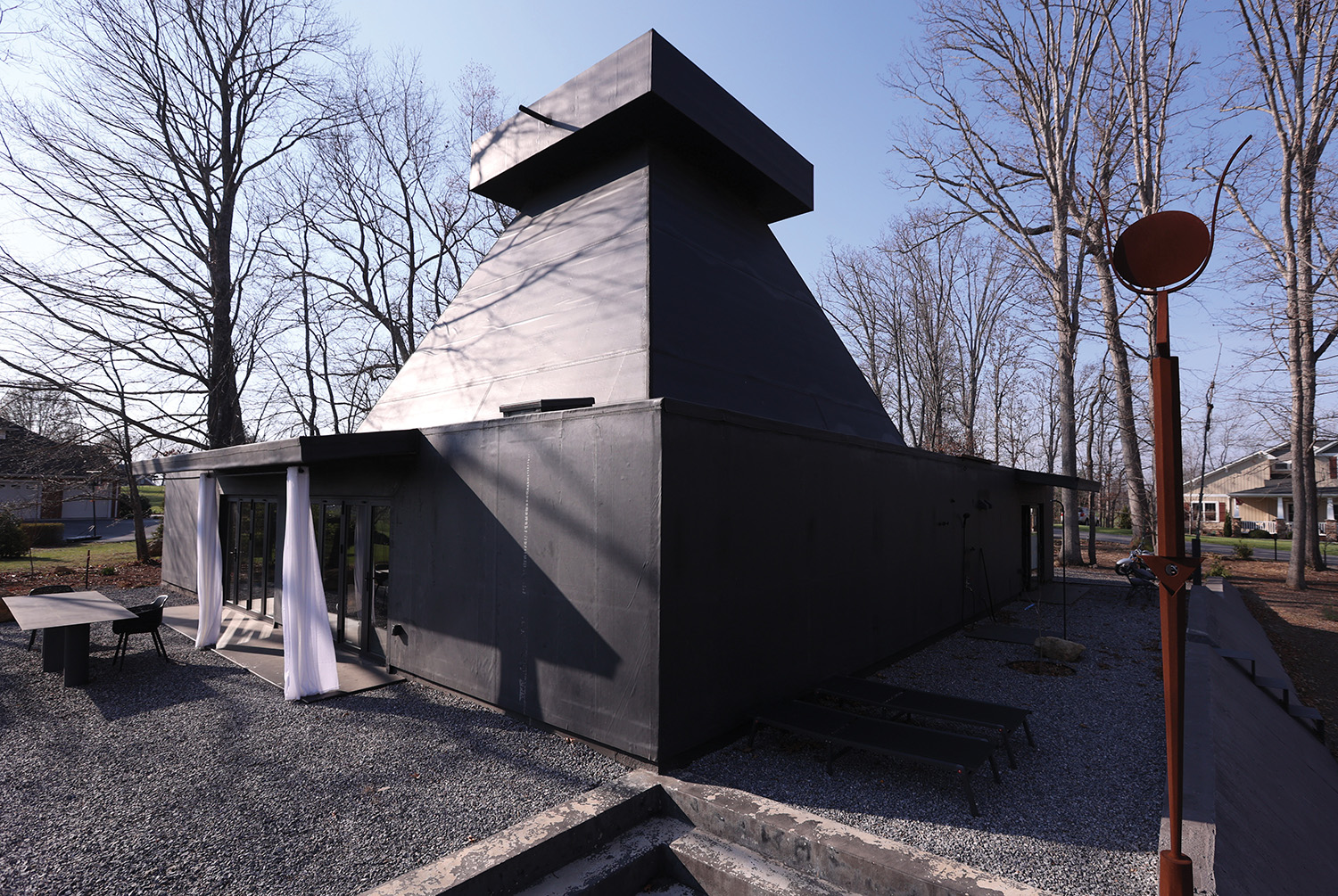
When Markus Breitschmid designed his unusual home outside Christiansburg, he knew it would garner attention in the surrounding landscape. It is 35 feet tall and, at first glance, it’s tricky to ascertain that it is someone’s home. “The shape of the building oscillates between the experience that people do not know what it is when they look at it and the shape being so simple that any child could make it: a box, a pyramid and another box stacked on top of each other. Between those two extreme poles of unfamiliarity and utmost familiarity, the building awakes curiosity.” Though the height commands attention, it is shorter than the average 4-story house.
One main goal for Breitschmid, besides a place to lay his head at night, was to create a building with no labels on the spaces or the rooms. “People make existential experiences when they are confronted with something that has a degree of newness, something that they have not yet dealt with, and something they cannot compartmentalize in their minds to their own individual satisfaction,” he explains.
Interior Experience
“Only in the state of the relative unknown awakes curiosity. Conversely, people don’t engage creatively with things they already know and tend to ignore them. The difference between the two scenarios is the enhanced quality of life for people. For this building, the intention is twofold — inhabitants should not know what it is when they first spot it, and they would not be able to rely on a presupposed room program to dwell in it.”
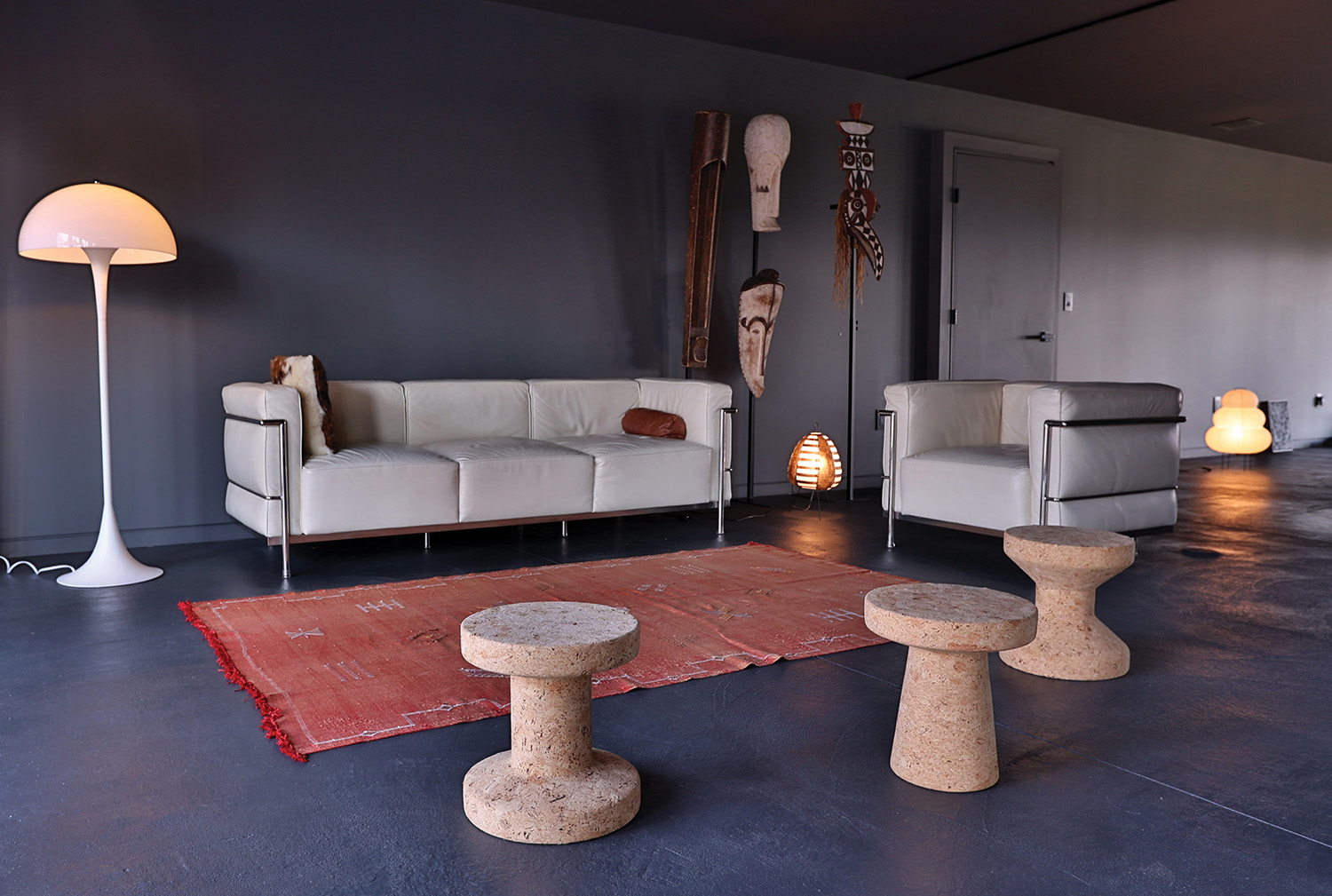
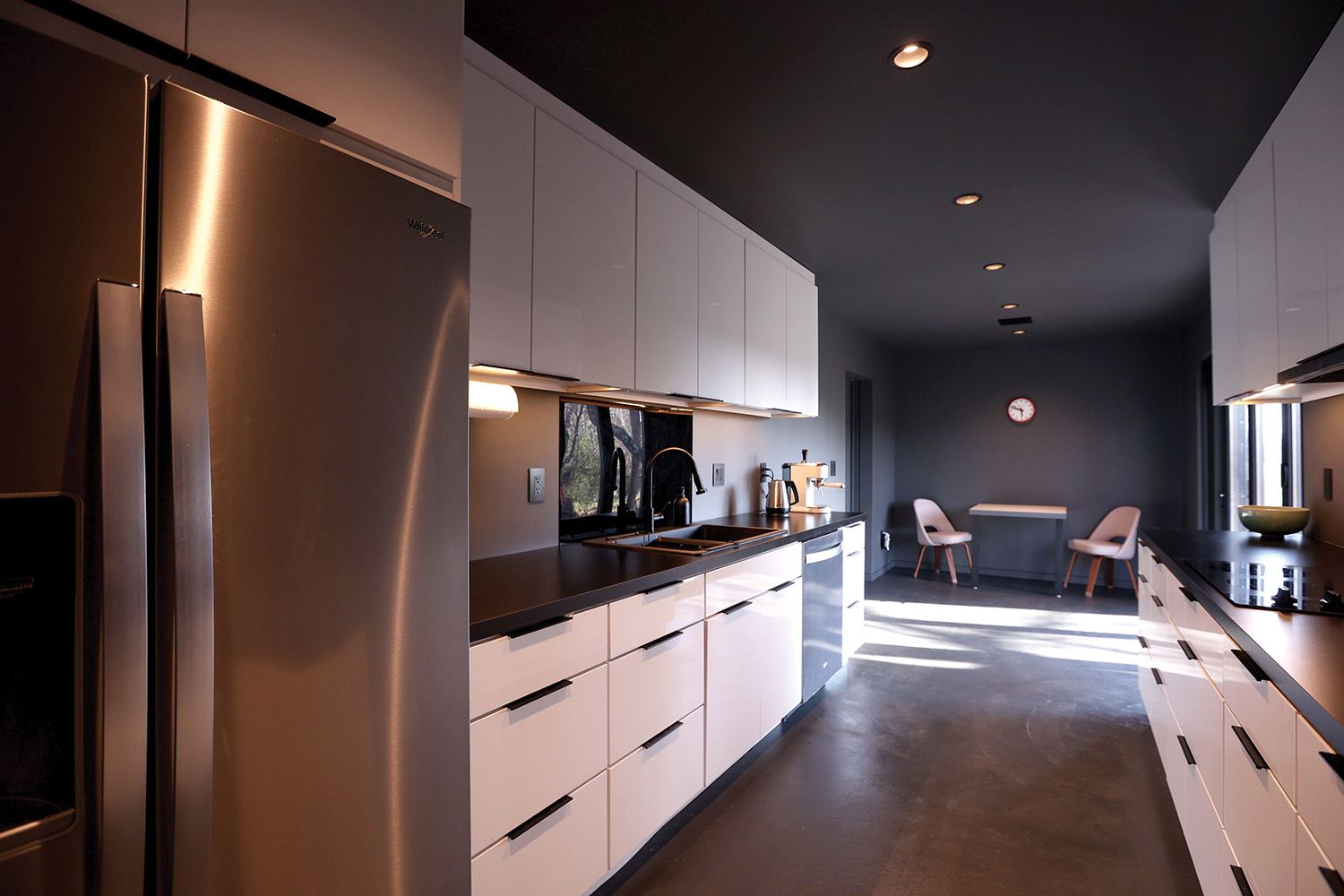
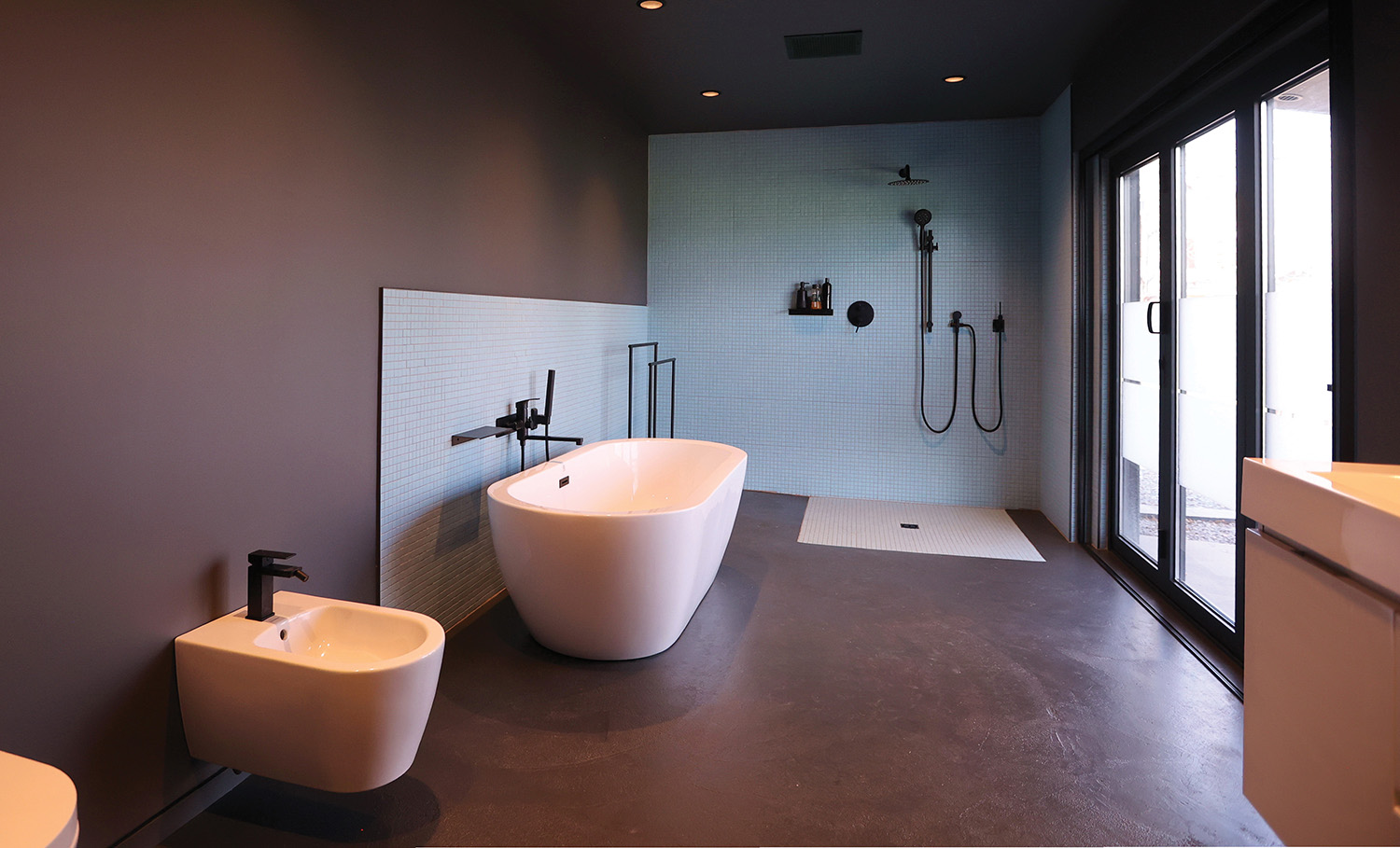
To continue with his theme of the uncharted, undefined space functions, there are no signs of traditional domesticity. The lower level houses one large room with columns and three doors. One column is skinny, one is very fat and one is a cross shape. There are three unmatching doors as well, with no hint of what is behind them. Upon opening them, you’ll find spaces common to all houses, yet Breitschmid prefers to describe them as “a place to cook and eat; a place to bathe; a place to store possessions; and to work,” eschewing typical room function names, like kitchen, bathroom, bedroom, closet and home office.
Natural daylight flows into this generous space through four large, bi-fold, glass doors, two on each shorter side of the room. The ceiling is a mere eight feet above the floor, for a compact atmosphere. “One tends to experience it as an extroverted room. The program of the room is undetermined. It could be anything. One could almost draw an analogy with a square in a small town where people converge and meet and conduct all sorts of business.”
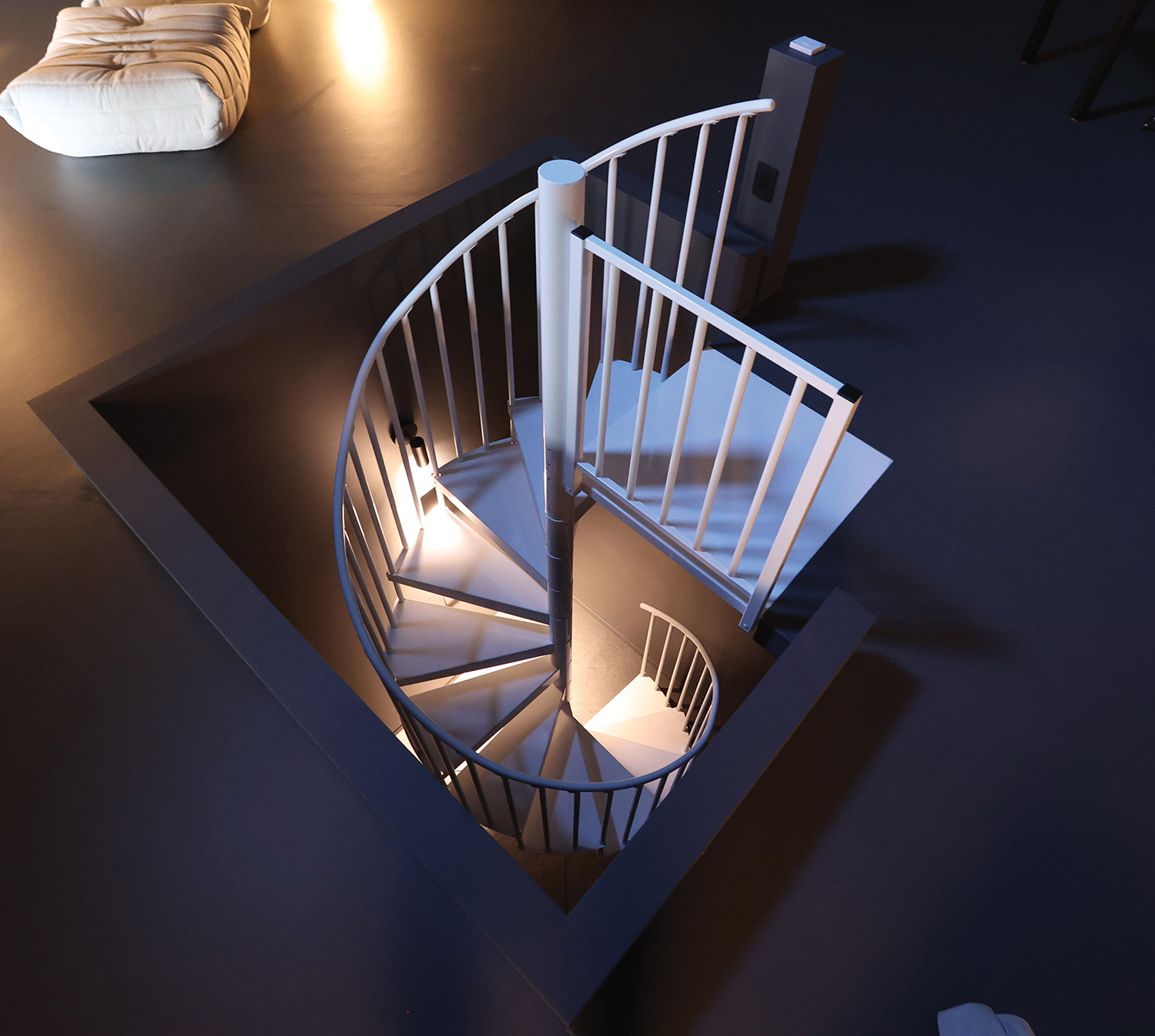
Stepping through the door in the fat column, onto a spiral staircase, delivers a grand contrast, being open 31 feet to skylight in the next ceiling. The second floor boasts a 30 by 30-foot space in the shape of a truncated pyramid. The transition is abrupt and stunning, though there exists the continuation of uniform dark gray floors, walls and ceilings. The natural lighting in here arrives via the very high skylight in the northern slanted wall, framing the crowns of 80-foot tall oak trees and the sky, and a very low window in the western slanted wall.
“At night without daylight, the room affords the opposite of the spectrum of spatial experience in as much as it becomes a completely introverted chamber by means of the four slanted walls enveloping and protecting inhabitants like a cozy, warm blanket.”
Planning and Construction
Breitschmid has traveled the world and teaches architecture at Virginia Tech. Thus, he has vast knowledge and vision in all facets of building design. He connected with Richard Caldwell of Caldwell Construction in Christiansburg through a friend of a friend in 2020 and broke ground the following year.
“It looks quite unusual on the outside,” Caldwell states, “but structurally, it is a very simple house.” Ditto from Breitschmid: “While the building looks unique and custom-made – for example, the house is entirely clad with EPDM (ethylene propylene diene monomer), the same material car tires are made of – the construction is entirely made with off-the-shelf materials and locally available techniques and craftsmanship. In the end, the building is very cost-effective and environmentally high performing.”
Caldwell lives to build. “I especially embrace unique buildings that you don’t see around every corner. My company builds more regular sorts of buildings, but I am a builder who seeks unique opportunities to use our construction and building cost management skills to construct unique houses.”
One challenging project inside was having no interior trim. If you know anything about trim and molding, particularly around windows, doors and baseboards along the floor, it is used to hide imperfections where corners meet. “Many contractors know they can be a bit sloppy here because the trim will polish the room’s look once installed,” Caldwell explains. His crew was especially attentive to quality finishing where walls met floors, ceiling, doors, windows and one another.
Breitschmid knows and appreciates excellent craftsmanship. Caldwell grasps Breitschmid’s thoughtful design processes. For example, the play of natural light. “Markus spends a lot of time thinking about windows, their location, shape, how light enters, what it looks like in different seasons, how it plays inside the space,” Caldwell shares. “He is diligent, intelligent, and despite the unusual design, he made sure everything was in compliance with code.”
The mutual admiration between these gentlemen runs deep, and already they are collaborating on another building project. Let’s hope they contact New River Valley Magazine to grace our pages with another of Brietschmid’s designs and Caldwell Construction’s high quality workmanship.
Text by Joanne M. Anderson | Photos by Jon Fleming
