
342
The allure of the desert is multi-faceted, but perhaps nothing is overshadowed by the unique vegetation. From the giant saguaro more than 40 feet tall, to the little pineapple cactus and other small varieties, there are nearly 200 cactus species in many sizes native to the United States.
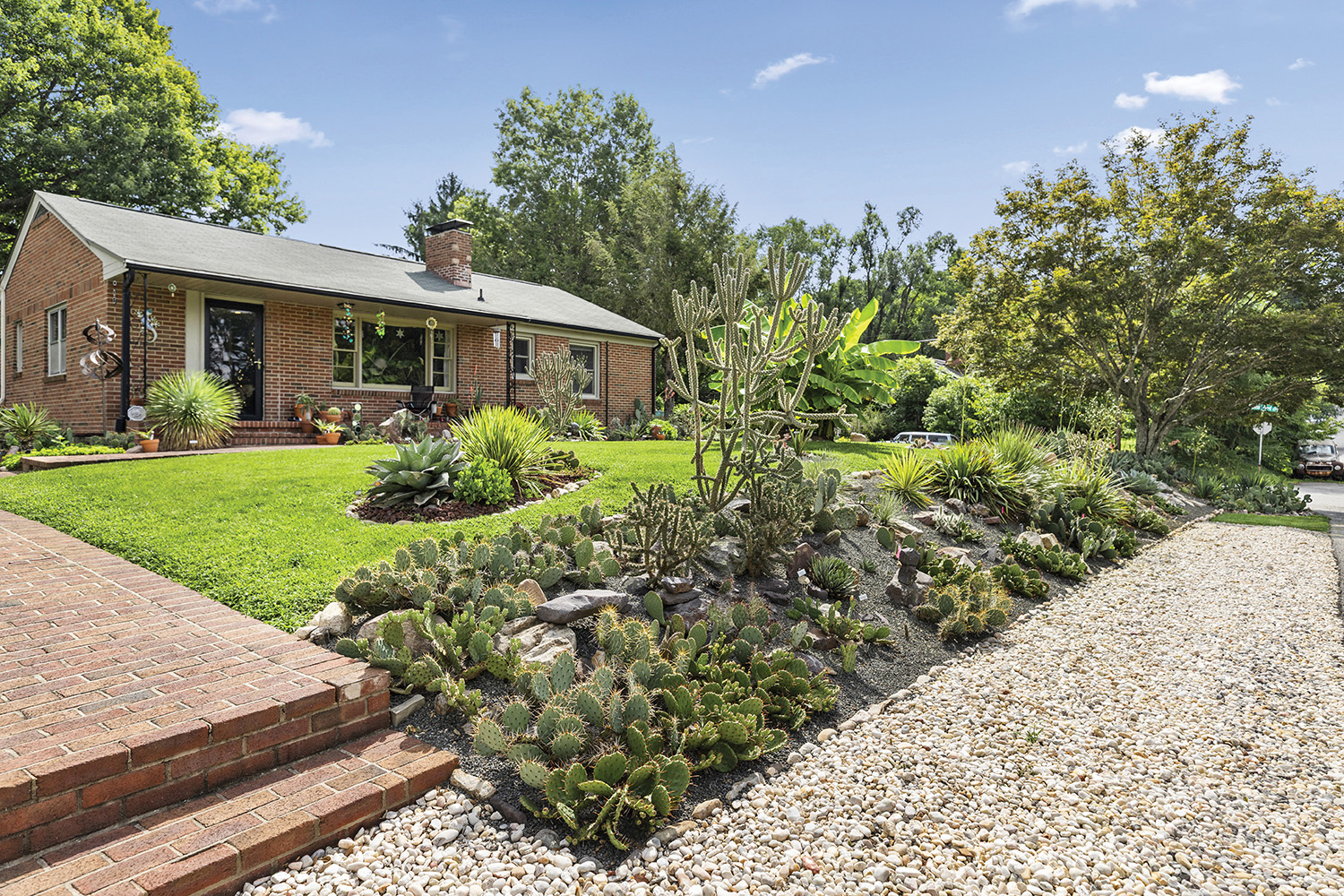
Most of them reside in the deserts in Texas, Arizona and New Mexico, but many grow inside and around Trent Davis and Mary Gaskill’s house. Since 2019, Trent has converted 3,000 square feet of previous lawn and traditional plantings to succulents. “I have always been attracted to the desert landscape,” he explains. “I began by converting a sandbox which came with the house into my initial xeric (dry) garden space.”
The House
Trent purchased the vintage 1958 brick ranch home on a corner lot in the spring of 2018. Stepping in the front door offers a view to the right of the original living room, fireplace, large picture window and a couple very tall cacti in very large pots. Two large dogs come bounding over, as interested to meet you as they are in their toy tug-of-war. The open view from a charming dining spot straight ahead, through a large open space in the wall to the kitchen and on to a family room beyond is as inviting as it is creative — a wonderful open space concept with room definition.
The main living area and kitchen had been remodeled, and he and wife Mary have remodeled bathrooms and replaced large items like the heat pump. “Mary has turned the full basement into her own private sanctuary, with soothing lighting, lots of books and cozy furniture,” Trent reveals. “It’s a finished space with a kitchen, living area, full bathroom and bedroom. It’s kind of like having a little home in a home.”
The Neighborhood
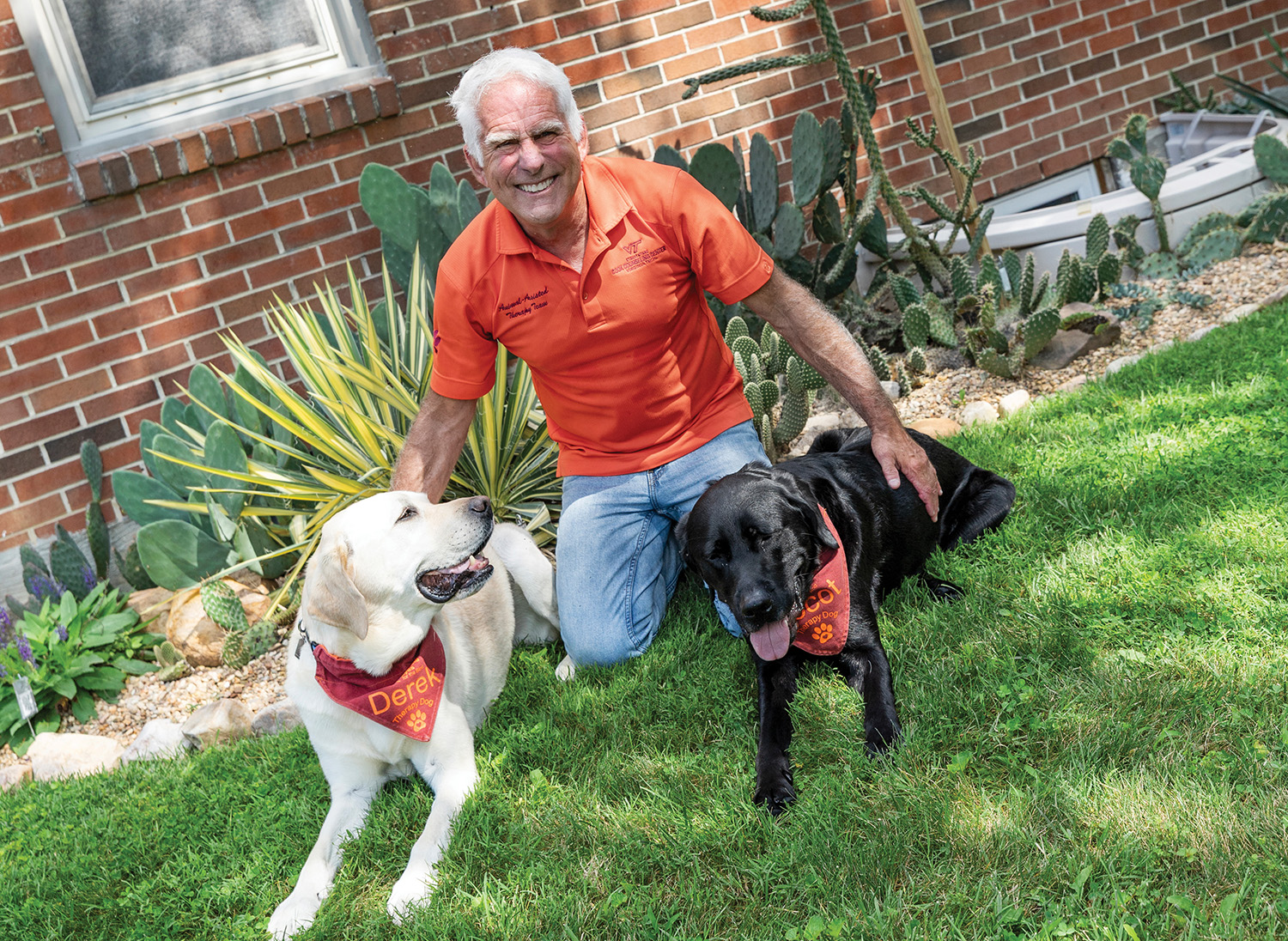
Location was a big factor for Trent. “I wanted something in the Town of Blacksburg close to my work at Virginia Tech. Since I coordinate the VT Therapy Dogs program and own two of the dogs, it is important that I can get to and from campus quickly for events.”
“The overall setting supports the kind of life we’re committed to living—balanced, relaxed and community-oriented,” he continues. “Mary and I are both counselors, and we each have less than a 5-minute commute to work. We can walk to the library, farmer’s market, and golf course to watch the 4th of July fireworks.” They often host their son’s friends for sleepovers and fun gatherings.
“There’s nothing overly ornate or pretentious about our house,” Mary relates. “It is just a modest, well-loved home that holds its own character — sincere, open-hearted and full of life. Outside these walls, the neighborhood is something truly rare, like stepping back into the 1950s. Neighbors know each other’s names, and more importantly, they care. They look out for each other, for each other’s kids, and offer thoughtful gestures when you least expect it. My son and his friends ride their bikes freely, neighbors walk their dogs in groups so they can chit-chat, and potlucks still happen on a whim. It’s a wholesome experience every day.”
The Cacti Gardens
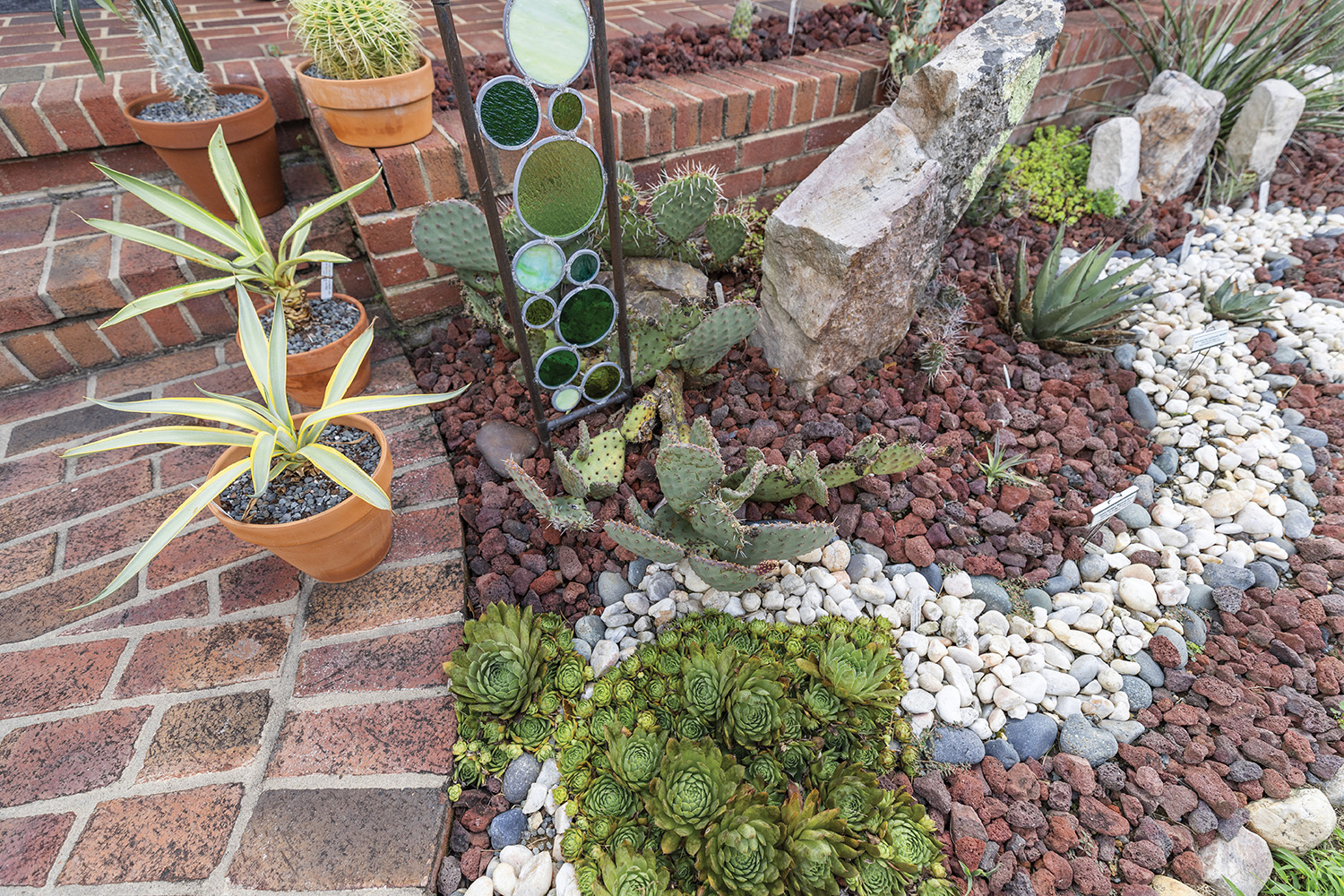
After success in the sandbox, Trent slowly started reworking previous planting areas to fit the cacti theme next to the house on most sides, adjacent to the sidewalk, and wherever a space was available. “This was a trial and error process, as I experimented with amendments to increase drainage (as important as temperature with desert plants) and found sources of succulents that would have the best chance of surviving and thriving. I estimate about a 50% loss of plants due to pushing the planting zone, among other challenges, in growing desert plants in the New River Valley.”
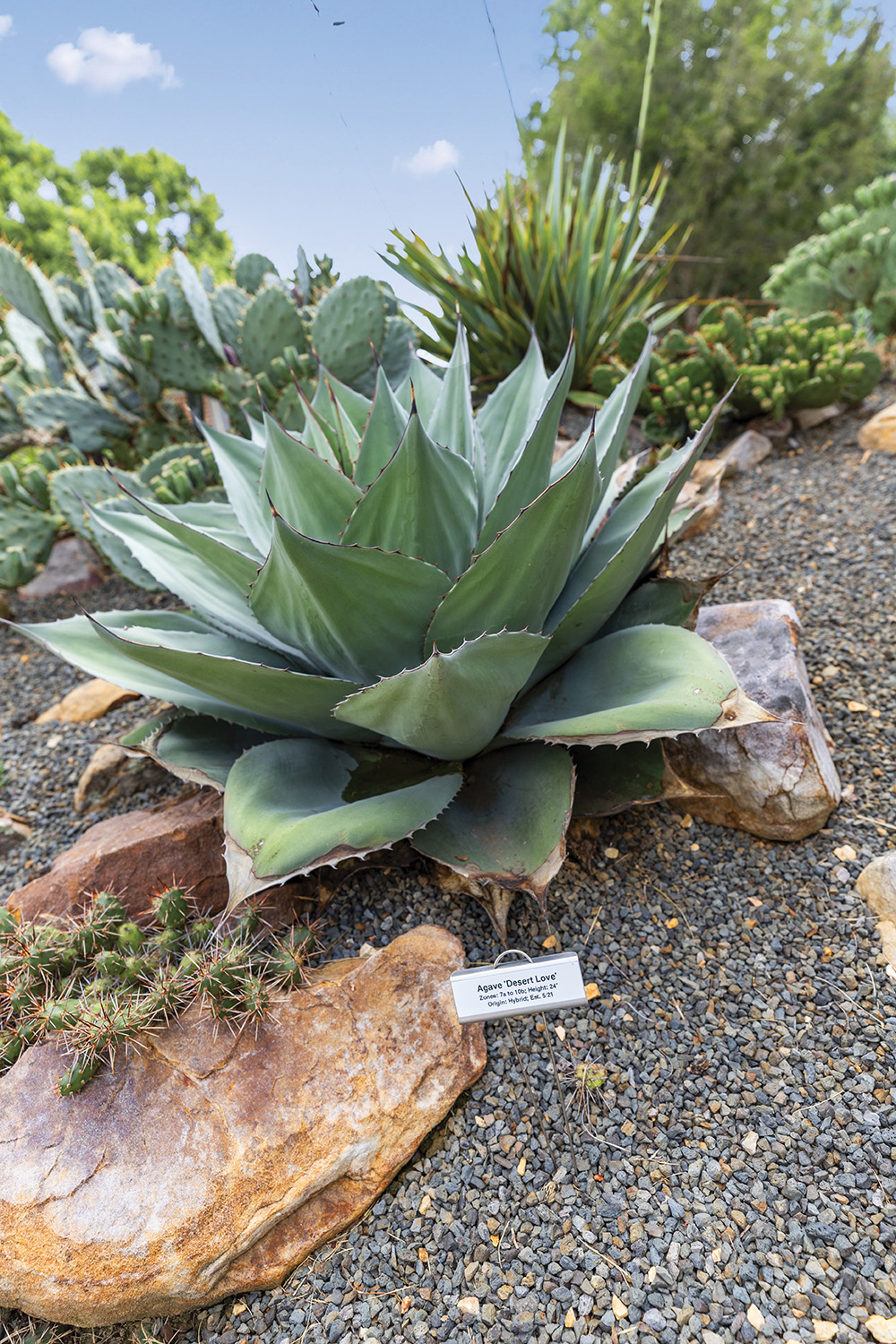
Trent’s main species are Opuntia (prickly pear cacti), Yucca, Agave, Cholla cacti, and barrel type cacti. He added some cold hardy bananas, palms and aroids for contrast and height. “When I travel, I always have a digging tool and metal tongs in case I discover something appropriate for the garden.” He once returned home from a vacation at the Outer Banks with prickly pear and Yucca.”
All the experimenting with this sort of gardening has been a great source of fun mixed with some frustrating parts. He encourages others to try this, considering the benefits of cacti being naturally deer proof and needing no supplemental watering after the first few weeks in the ground.
“Plus, they are very cool plants, and when they bloom, it is indeed spectacular!”
Derek, 9, yellow Lab, and Epcot, 4, black Lab, each moved to Blacksburg when they were 2 for full-time positions as therapy dogs at Virginia Tech. Besides participating in individual and group student counseling sessions, they attend hundreds of outreach events on campus and in the community.
Derek’s favorite downtime activity is swimming and retrieving, ideally at the same time. He is related to Moose, the founding dog of the program.. Epcot engages Derek, or anyone game to play, in tug-of-war games. Epcot also has “spy creds” for having served with the NSA (National Security Agency) during his puppy training years.
Text by Joanne M. Anderson
Photos by Christy Wallace
