
330
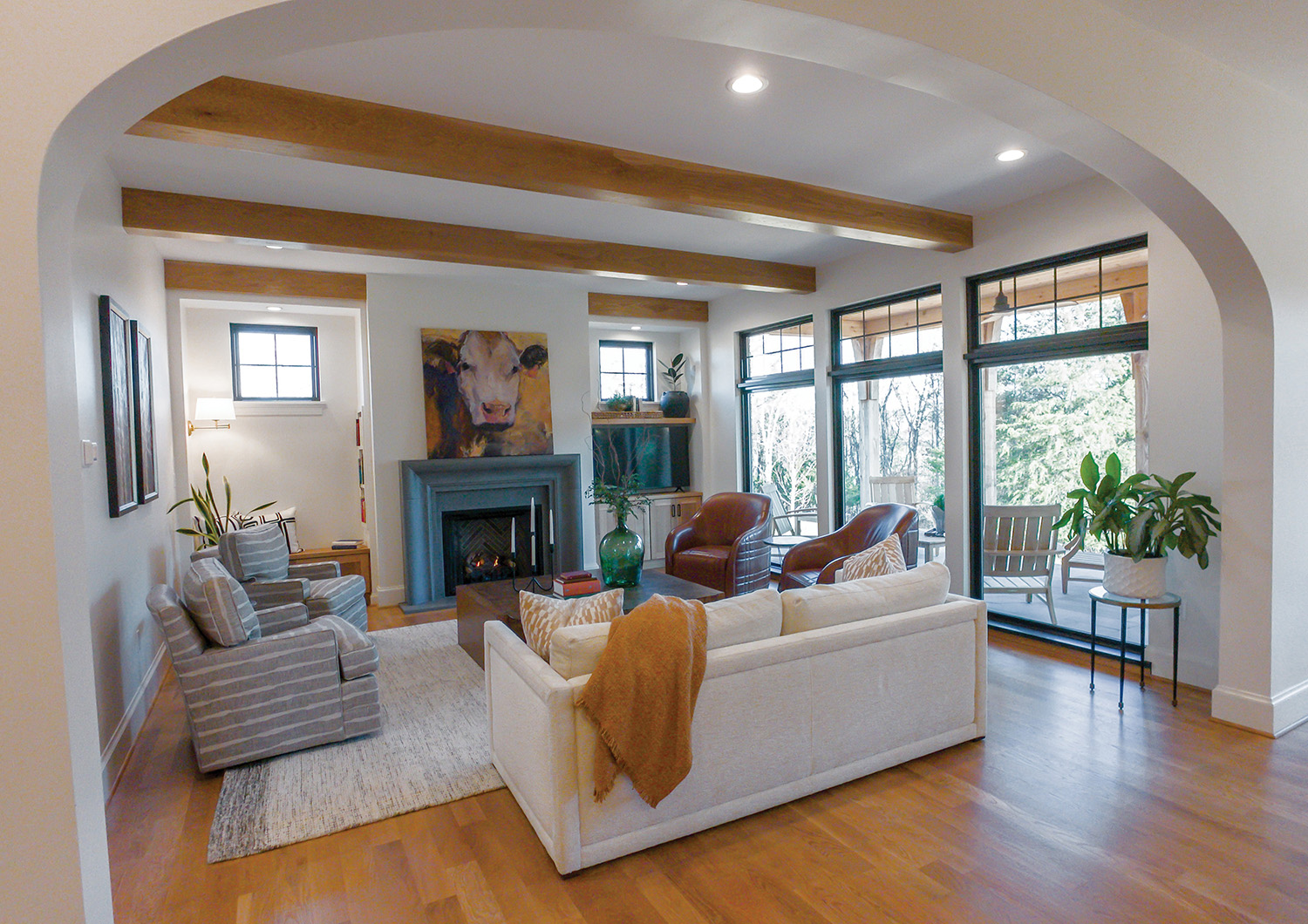
Photo courtesy of Progress Street Builders, provided by Hickory Knoll Architects
In ancient times, decorative ceilings most often symbolized power and extravagance. The elaborate ceilings in the Sistine Chapel, Palace of Versailles and the U.S. Capitol dome create an almost overwhelming visual impact.
Traditionally and residentially-speaking, porch ceilings have been painted blue and interior ceilings painted white. Ceiling paint is specially formulated to hide imperfections, minimize drip and reduce glare overhead. But there’s a movement afoot to replace popcorn, smooth and swirled texture white expanses above with colors, wallpaper, decals, wood and 3-D versions.
“A well-designed ceiling can certainly have a notable impact on any room,” states Alex Scott, owner and principal designer for Hickory Knoll Architects. “Implementing methods that either attract your eye upward or soften a room’s height can enhance the qualities of any space.”
The ceiling is often referred to as the 5th wall of a room, and an interesting treatment draws the eye up, creating a more spacious feeling and more intriguing atmosphere. Among the simple ceiling upgrades, which do not include renovating the surface itself are adding a chandelier, crown molding, ceiling medallion or tongue-and-groove wood paneling.
Coffered and tray ceilings have become popular in new construction offering an elegant décor component. Coffered ceilings have several, often ornate, recesses for a luxury look. Tray ceilings are more simple with one large recess, offering an airy feel. Some tray ceilings also conceal lighting in the edges.
Ceiling finishes may well be limited by one’s imagination, with the most common ones being:
Paint or limewash, glossy or reflective, makes a room feel larger in medium and light colors, darker and more intimate in black or dark shades.
Wallpaper adds drama, color and texture and requires careful planning for scale, lighting, preparation and installation.
Wood brings warmth to any room, especially in a ceiling. Beams can be faux or real, and the natural texture delivers on the oxymoron rustic elegance.
Dimmable lighting offers a wide range of effects. LED cove lighting, recessed lighting, sconces, picture lights and track lighting can create soft illumination or spotlight artwork or interesting features.
Skylights and moon lights are the ultimate for natural daylight streaming in through the ceiling.
Accessories, decals, borders, trim and molding pieces and ceiling fans all add to the décor of the entire space.
On the lighting front, Scott explains: “Today’s lighting philosophy relies on frequent use of recessed lights which focus on the illumination of walls and task spaces. Ceilings require additional layers of up-lighting provided by fixtures such as sconces, pendants and chandeliers. Contemporary homes have begun to use LED tape lighting to bounce indirect light off the ceiling.”
“Welcoming textural treatments such as shiplap, wallpaper or architectural beams make a room feel custom,” he continues. “Installing panel molding or coffers can increase the formality of a dining room while natural wood tones increase coziness and warmth of a library. If a room’s trim color is white or off-white, I naturally specify the ceiling to match. Another popular trend is to extend the room’s wall color up onto the ceiling, a moody effect known as ‘color washing’”.
If you seek something new and different in your home, but are happy with the interior colors and furniture, look up. Ceiling treatments are abundant, and they can anchor a room and transform the entire atmosphere of any space.
Text by Joanne M. Anderson
Photo courtesy of Progress Street Builders, provided by Hickory Knoll Architects
