
573
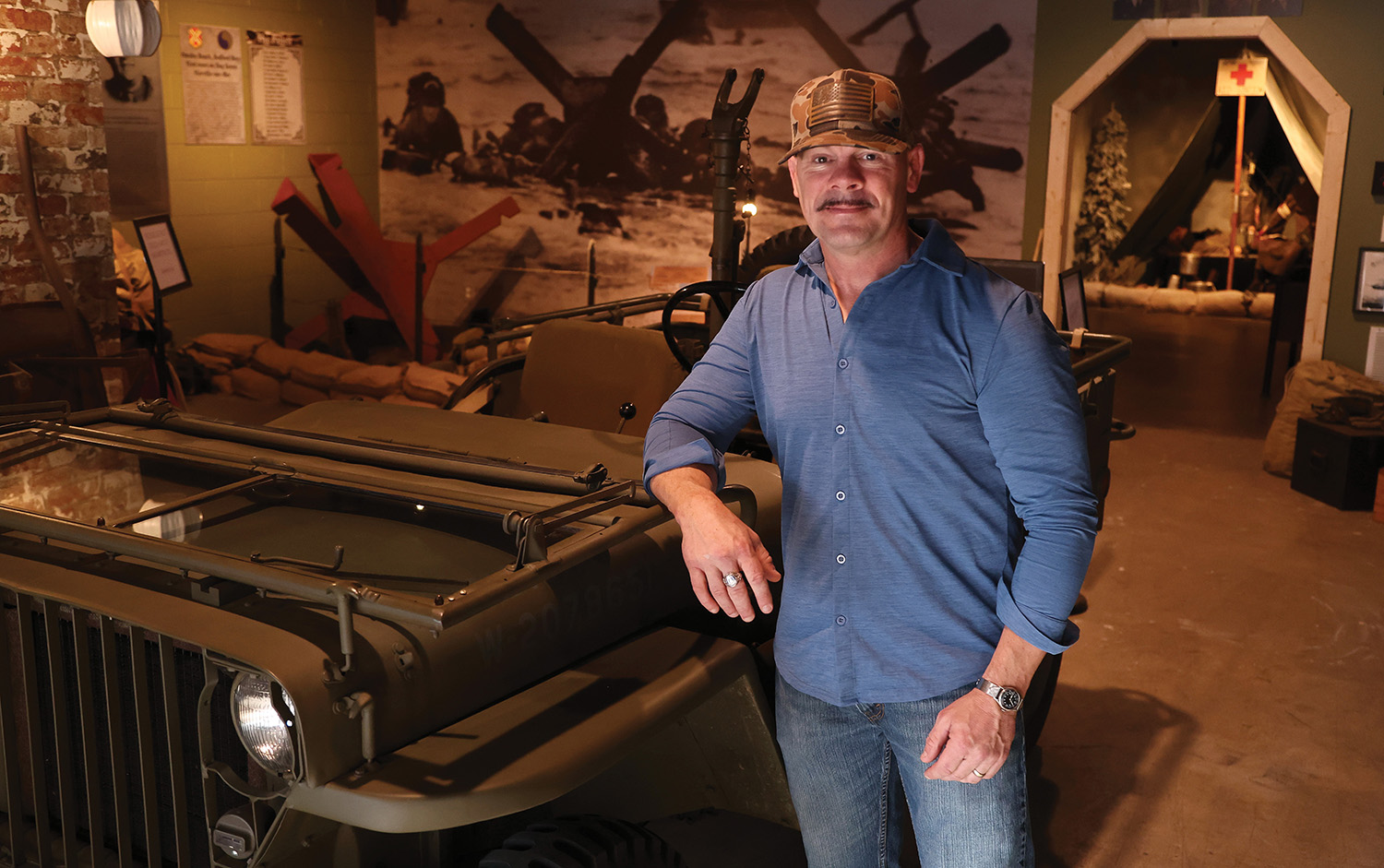
When Joseph Collins was a young lad, growing up in England with American missionary parents, his grandfathers often took him to museums. They both served in World War II, and these museum excursions and their stories sparked a passion for WW II that never left the boy’s heart.
At age 10, Collins picked up his first of many (many, many, many) World War II collectibles – a mussette bag. Interestingly, this lightweight, usually canvas, shoulder bag is very common with bicycle commuters in urban settings.
Later stateside, Collins graduated from high school at Gateway Christian Academy in Blacksburg. After some time at Pensacola Christian College, he enlisted in the U.S. Marines. He served four years, while longing to attend jump school (and jump out of airplanes!). Collins was granted a branch transfer to the U.S. Army and jump school.
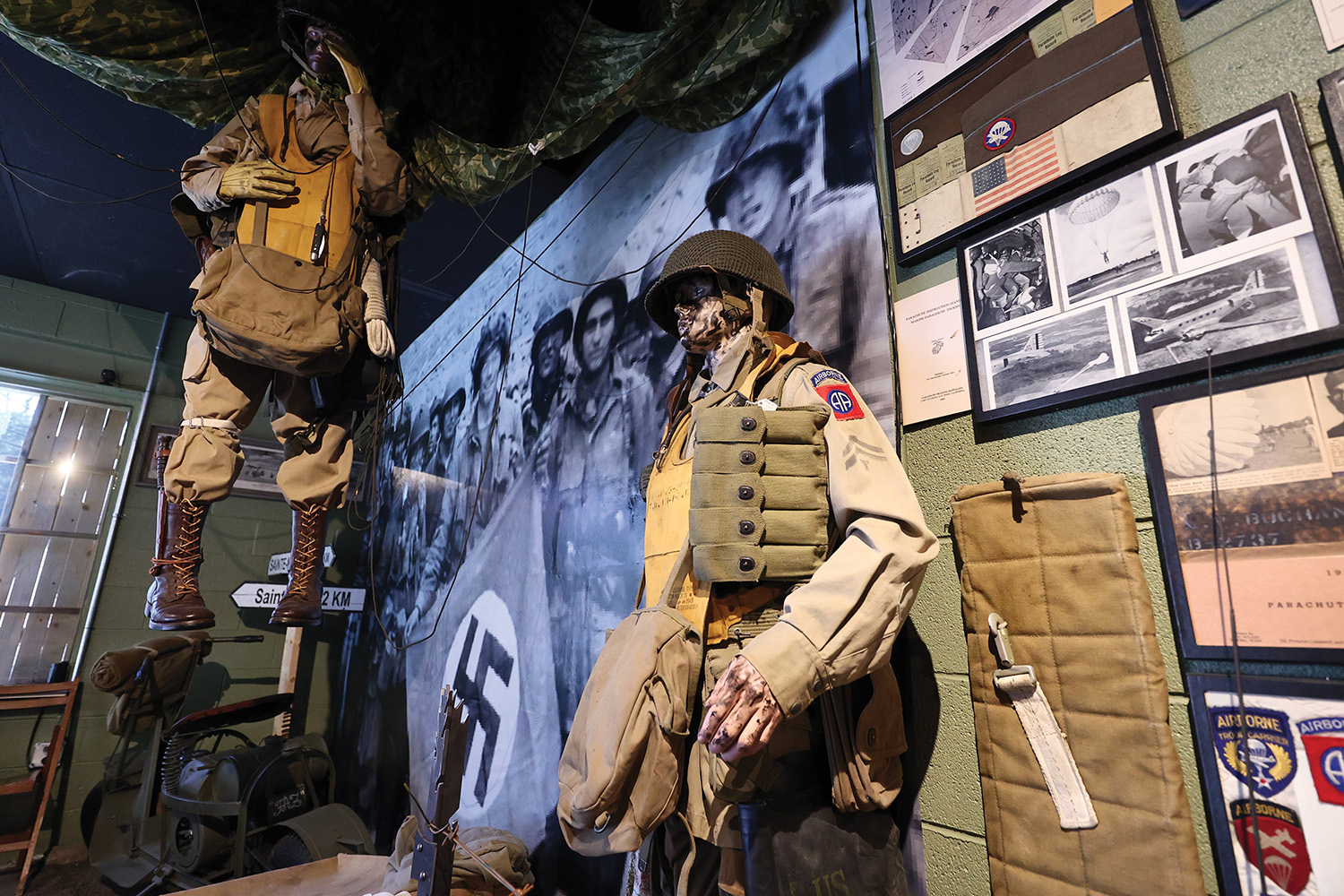
The first public jump with a parachute occurred in 1783. On June 6, 1944, more than 13,000 British and American paratroopers jumped into darkness over Normandy before the beach invasion. Jumping always intrigued Collins from the historical angle, and he continues to jump with the World War II Airborne Demonstration Team, based in Oklahoma. After getting married in 2000, Collins did two tours in Iraq before coming back home to the New River Valley where he resides with his wife and two boys.
Planning the Museum
The idea of a museum has probably been percolating in Collins’ mind for decades, but the past two years, it began to take shape. The reality is that it isn’t so much about having a place to display these things as it is to impart knowledge and understanding of this great war to current and future generations. This unique museum is like a guardian of the facts, the sacrifices and the reality of what happened, where, to whom, how and why.
Touring the Museum
From the visual introductory video through the various spaces of the World War II Museum of the New River Valley, Collins has assembled and displayed exhibits and scenes which tell expressive stories. Radio announcements, small movements and music of the era are heard and seen in several places.
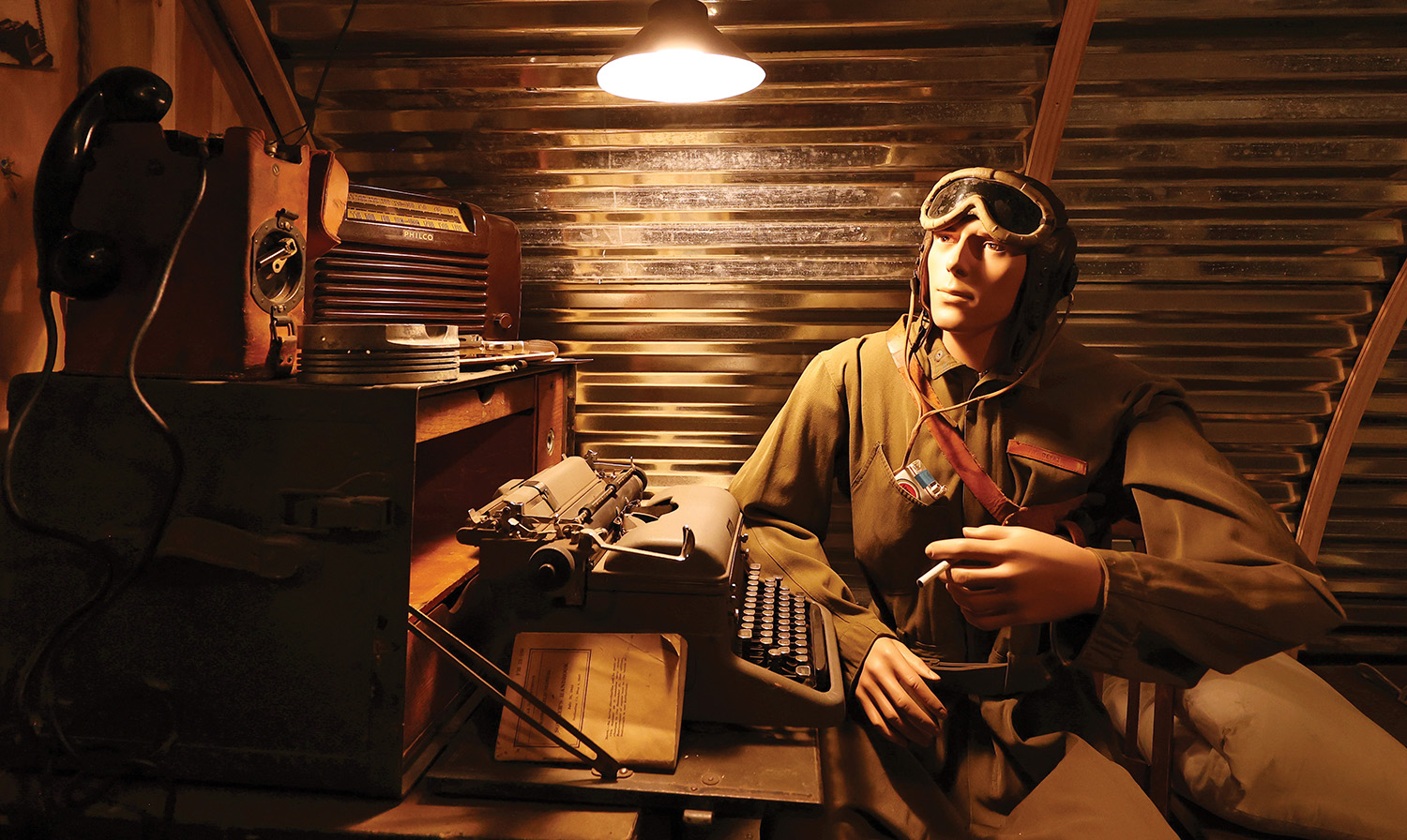
Soldiers are positioned in different ways for different tasks. One is hunkered down behind sandbags. Another is going somewhere on a motorcycle. The medical aid station tent, crude by what we know of urgent care, has both patient and doctor with first aid supplies at hand. Inside the Quonset hut, a journalist sits at a typewriter with a hand-crank telephone and Philco radio on the desk.
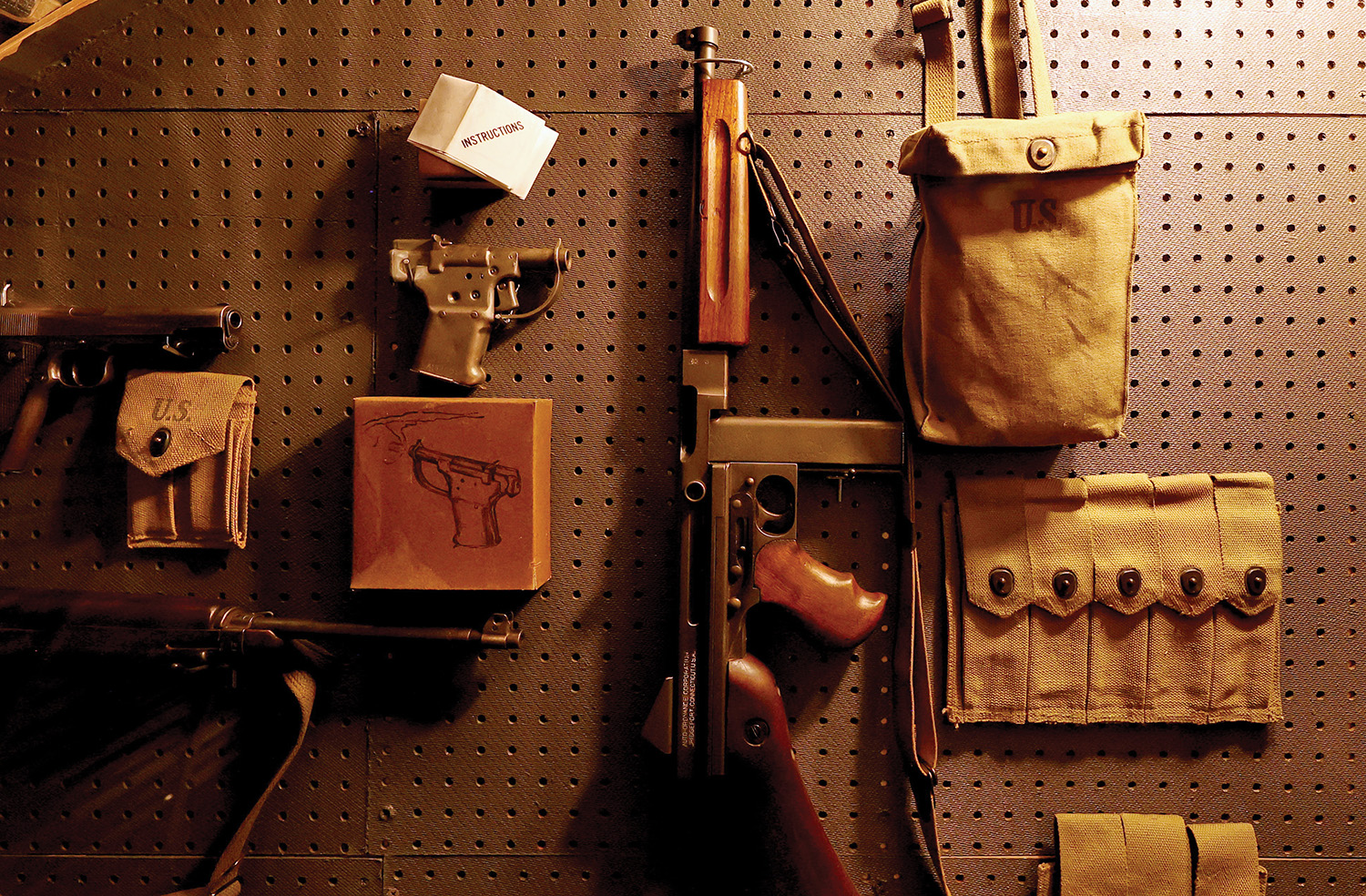
Suitcases and duffle bags would have been everywhere for all the traveling. Belts, helmets, knapsacks, canteens, furniture, a period lace doily and quilt, uniforms and framed posters, letters and other ephemera are artfully displayed. Large model airplanes, a jeep, bicycle, the motorcycle and boots illustrate various modes of transportation.
Having toured large and small museums around the world, it’s obvious Collins scrutinized what makes presentations captivating. “I want visitors to become immersed in the time and place of different events that unfolded during World War II. It is a very significant part of world and U.S. history that must be preserved,” he relates. The entire tour sparks wonder and awe, along with a deeper understanding of the perilous nature of war and the monumental sacrifices which were made.
The Greatest Generation was composed of around 63 million U.S. citizens born roughly between 1901 and 1927. They came of age, and many endured significant hardship, during the Great Depression, followed by the atrocities of World War II.
The late Virginia senator John Warner joined the U.S. Navy at age 17 and once spoke of how events in the 1930s and ‘40s were powerful “to forming my generation, to shaping the world we lived in, and in providing the lessons we learned to carry us through life.”
Among the characteristics which defined this multitude are personal responsibility, a strong work ethic, patriotism, perseverance, resilience, integrity, humility, courage and frugality. The willingness to sacrifice time, food items, energy and life itself was paramount in winning World War II.
The statistics are grim. Some 75-80 million deaths worldwide, roughly one-third military and two-thirds civilian. Just over 16 million Americans served with around 407,000 killed and 670,000 wounded. 130,000 were held prisoners of war, 15,000 of whom never made it home.
Fifty countries were involved in the war, and stateside, millions of women left their homes to work in factories, offices and anywhere men left jobs to go to war. Many joined the WAVES and the WACS – Women Accepted for Volunteer Emergency Service and Women’s Army Corps.
Among items rationed were sugar, meat, fats, coffee, cheese, gasoline, tires, rubber, cars and bicycles. Leather was needed for military shoes and boots, and silk for parachutes. A handwritten letter to or from a loved one might arrive in a week or a month. Many soldiers met their children when they were 1 or 2 or 3 years old.
John Warner, in an article published on pew.org, wrote this:
Our shared respect for each other was largely forged from our military experience. We had learned to respect and have confidence in the persons serving with us, knowing that our very lives depended on each other. That was a very strong bond. But we all are capable of nurturing within ourselves the self-discipline, sense of responsibility, desire for humility, and loyalty to one another that leads to finding a common good. I can only hope that we all learn from these times, that we learn that sacrifice can be good for us, that discipline is required of us, that humility is necessary for us, and that loyalty must guide us.
Free admission ~ donation jar
Tues-Friday, 9 a.m. – 2 p.m.
Saturday, 9 a.m. – 4 p.m.
1531 N. Main St., Blacksburg
www.thewwiimuseumatnrv.org
Text by Joanne M. Anderson
Photos by Jon Fleming
